
The topic of today’s entry in Nerds Who Read is more nerdy than read-y: The latest movie release from Marvel Entertainment—Captain America: Civil War.
 The movie borrows its premise from The Incredibles: people are fed up with the collateral damage superheroes bring in their wake as they save the world. Property destroyed. Innocent people killed.
When a bomb detonates in a Nigerian office building during an Avengers operation, the world decides enough is enough. A bunch of nations get together and draft the “Sokovia Accord,” a treaty that places superheroes under the control of the United Nations. From now on, the Avengers won’t decide for themselves when and where to deploy. Bureaucrats will decide for them.
Tony Stark/Iron Man is all for it. “We need to be put in check,” he says. But Steve Rogers/Captain America is more skeptical. “If we sign these accords, it takes away our right to choose.”
What starts as a theoretical disagreement is soon put to a real-life test. There is another explosion, this time at the ratification ceremony for the accords themselves (An aside: I don’t think the writers understand what “ratification” means). Security footage shows the bomb was planted by Captain America’s old war buddy, Bucky “The Winter Soldier” Barnes. The UN, with Iron Man’s support, want to take Bucky down. But Cap suspects there’s more to the story than meets the eye, and indeed, dirty work is afoot. Helmut Zemo, the former commander of an elite Sokovian paramilitary unit, is definitely up to something. Cap wants answers and he wants to protect his friend; that means finding Bucky first and keeping him alive. Soon the whole Avengers team unravels as the members split between Iron Man and Captain America.
It’s sad when old friends fight. Especially when none of them are really bad guys. The challenge for the writers of Civil War is to put Cap and Tony at loggerheads without it being a downer for the audience. They succeed by making it fun. The main battle scene is full of great special effects and clever wisecracking. A couple samples of the latter: After Iron Man gets knocked on his ass (a temporary setback) his suit’s computer voice informs him, “Multiple contusions detected.” Tony replies, “Yeah, I detected that, too.” And when Black Widow—the member of the team most conflicted about the civil war—comes face-to-face with Hawkeye, she asks, “Are we still friends?” Hawkeye’s reply: “That depends on how hard you hit me.” To add to the fun, both sides, realizing they’re shorthanded, bring in reinforcements from other corners of the Marvel Universe. I won’t say who they recruit—I don’t want to spoil the surprise (albeit it’s in the trailer)—but one of these superheroes steals the show.
If actions sequences and wisecracks were all there were to Civil War, it would come off as campy. Fortunately there’s a great deal to it that’s serious. A second battle between Cap and Iron Man—this time one-on-one (mostly)—is more bittersweet. And there is the very real issue, at the root of Civil War, the conflict between government control and freedom. Indeed, I’m not the first to notice that the Marvel Civil War mirrors the Republican Civil War that is raging as I write this. Not only is the Grand Old Party, like the Avengers, tearing itself apart between the authoritarians and the libertarians, but old allies have turned decidedly bitter. (An interesting side question: Who is Donald Trump in this? Is he the authoritarian leader, billionaire Tony Stark? Or is he the outsider who instigated the conflict, Col. Helmut Zemo?)
I did have some criticisms, and here I get into some spoilers:
- The plot is overcomplicated. The movie could have stood on its own as a conflict between Cap and Iron Man, or as a conflict between Zemo and the Avengers. But the writers rammed the two conflicts together and it’s messy. Like a set of simultaneous equations that are overdetermined. Also it gives the writers a cheap out: they can resolve the conflict without ever having to face the issue of whether the Sokovia accords were the right thing to do.
- Zemo’s plan is a house of cards. It depends on Bucky being taken alive and turned over to the UN, who then must take him to a particular prison, which conveniently for the plot has no backup power source in the event of a blackout. Zemo has no control over any of this; there is no way he could possibly count on every one of these elements falling into place.
- We learn that Bucky is not the only Winter Soldier—the Soviets made five more who are hidden away somewhere. The movie seemed to be hyping an impending conflict between them and the Avengers, but it never comes, thanks to some bulls--t. In a way, I was relieved—it was already a long movie. But still, sloppy storytelling.
In spite of the shortcomings in plot construction, I enjoyed the movie immensely. Perhaps my favorite part was some words of wisdom from Captain America’s almost-but-not-quite old flame, Agent Carter. They were quoted by another character at a time when Cap was torn over whether to sign the Sokovia Accord:
| Compromise where you can. Where you can't, don't. Even if everyone is telling you that something wrong is something right. Even if the whole world is telling you to move, it is your duty to plant yourself like a tree, look them in the eye, and say "No, you move." |
These words, like the movie, are a wonderful tribute to human integrity.
Coming up next on Nerds Who Read: a review of the Marvel Civil War graphic novel
Michael Isenberg is senior editor of Nerds who Read and author of Full Asylum, a novel about the conflict between government control and liberty. With hospital gowns. Check it out on Amazon.com.

 To kick off my series of reviews of great Batman/Superman (and sometimes Wonder Woman) crossovers, I will start with the first time I saw my two childhood heroes together on the same screen: The Batman/Superman Movie: World's Finest (1997). This animated TV film (full running time just over an hour) officially bridged the successful long running Batman: The Animated Series and its Superman companion series. Much as the new DC Comics movie, Batman vs. Superman: Dawn of Justice attempts to found a shared cinematic universe, World’s Finest is a crucial link in a chain of animated projects in a DC Animated Universe, culminating a decade later in the TV series Justice League Unlimited.
 If, like me, you choose to start reading Stand Still, Stay Silent during a cold New England winter night, I recommend you do so with a cat nearby. As we learn from this webcomic, according to Scandinavian lore, cats can sense malicious trolls and spirits. Having one softly dozing on the couch beside you might help re-assure you that the creaks and groans of a house settling at night isn’t something nasty scampering along your roof or tapping on your windows trying to get in.
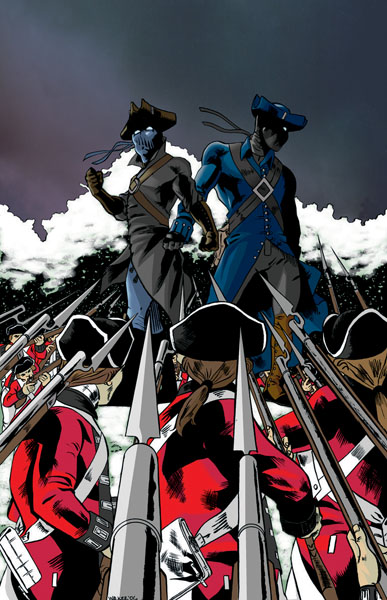 Living most of my life in Massachusetts, I count myself lucky to have visited many locations crucial to the Revolutionary War and the founding of the United States. As a fan of science fiction and fantasy, I have always been slightly disappointed by the lack of fantastical spins on our nation’s founding era. In American alternate history stories, the War of Independence trails a distant third to World War II and the Civil War for novels created out of “what if” scenarios and war gaming. A fascination with the historical old west has produced plenty or weird west tales and cowboy ghost stories. The demand for more steampunk is currently mining every buried lump of story potential from America’s industrial years. But it seems like fantastical takes on our founding are few and far between. Perhaps as other historical periods become overdone though, more creators will find fertile ground in this era of rebellion. The Assassin’s Creed 3 video game and several of its spinoffs were set against the backdrop of the American Revolution, and Fox’s supernatural action show Sleepy Hollow re-imagines Washington Irving’s hapless schoolteacher as a swashbuckling spy charged with preventing the British from winning the war through dark magic.
 Keen-eared aficionados of American Jazz, Rock, and R&B might recognize the name Stagger Lee (or Stagolee) as a legendary outlaw. He entered the American mythology when he shot down card sharp Billy Lyons in an old west Texas saloon. Or was it because Billy Lyons was sleeping with Stagolee’s woman and it wasn’t Texas but the gold mines of California? And was it because Billy messed with Stag’s wife or Stag’s Stetson hat? Or was it an act of self-defense in a bar brawl in Mississippi? Or was it Georgia? Were Lyons and Lee not figures of the 1890’s but rival pimps in 1970’s Detroit? Over the years Lloyd Price, Fats Domino, Wilson Pickett, Bob Dylan, Jerry Lee Lewis, Ike and Tina Turner, and the Grateful Dead have been just a few of the musicians to sing Stagger Lee’s song of murder and revenge.
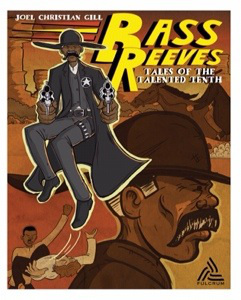 For Black History Month, I thought I’d post some reviews of books and graphic novels featuring and/or created by African Americans. First up is the graphic novel Tales of the Talented Tenth, Vol. 1: Bass Reeves. This biography covers the formative years and career highlights of the title character, an escaped black slave who went on to have a prolific career as a lawman in the Wild West. Reeves is often cited as having captured over 3,000 fugitives from justice, the highest rate of the era. Frequently overlooked in earlier whitewashed narratives of the Old West, Reeves’s amazing story is beginning to gain more recognition in both history and fiction.
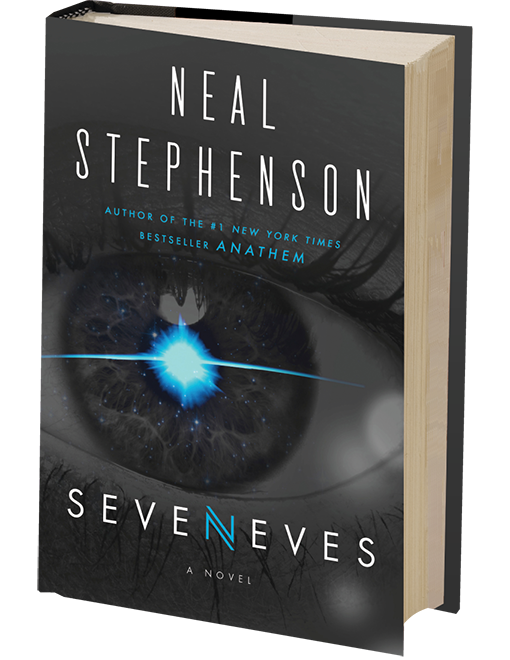 The composer Rossini once said that Wagner’s operas have great moments but awful quarter hours. Apparently what’s true of Grand Opera is also true of Space Opera. For although Neal Stephenson’s Seveneves features captivating characters on spectacular adventures, between the adventures are vast stretches of emptiness, much like space itself.